

The situation
Flange connections are among the most critical mechanical joints in an offshore wind structure. Their flatness decides whether the bolts can be preloaded correctly, and that in turn affects fatigue life, maintenance and the integrity of the whole structure.
As turbines grow, so do the flanges on monopiles, transition pieces and tower foundations. Traditional correction methods such as heat straightening can struggle to deliver the required tolerances on today's eight-plus metre flanges, where even small geometric deviations affect bolt preload and long-term reliability.
CS Wind Offshore, a leading manufacturer of offshore wind foundations and transition pieces, wanted a manufacturing process with the precision that next-generation offshore projects require.
What we did
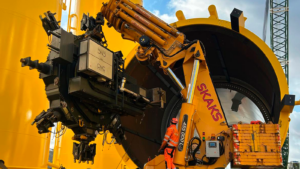
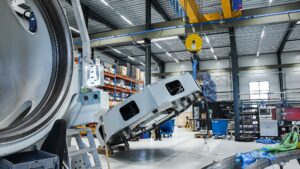
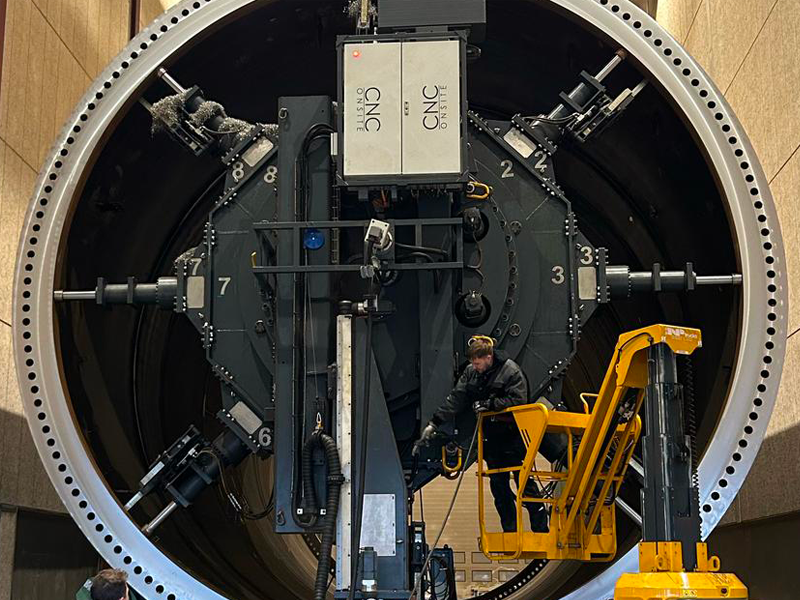
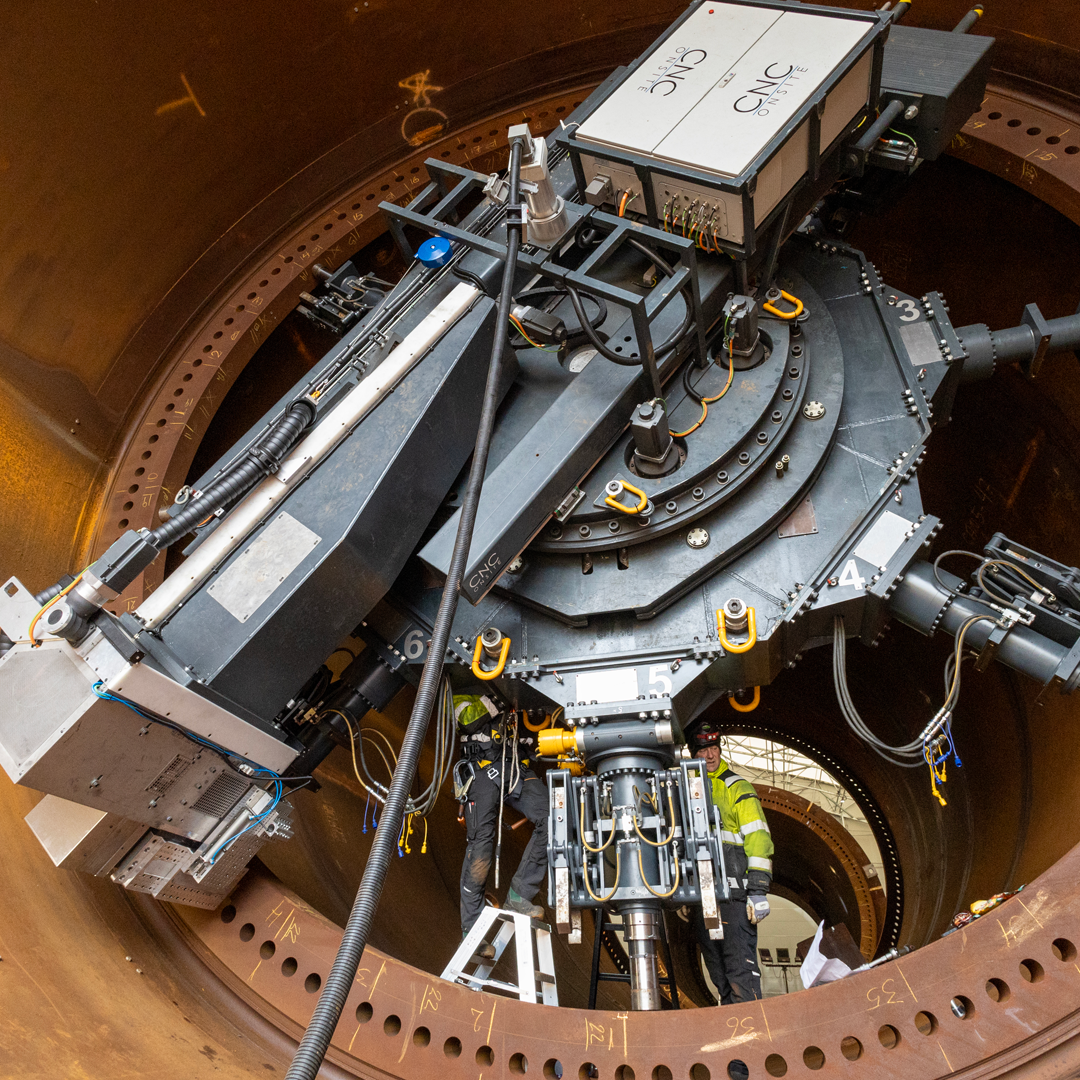
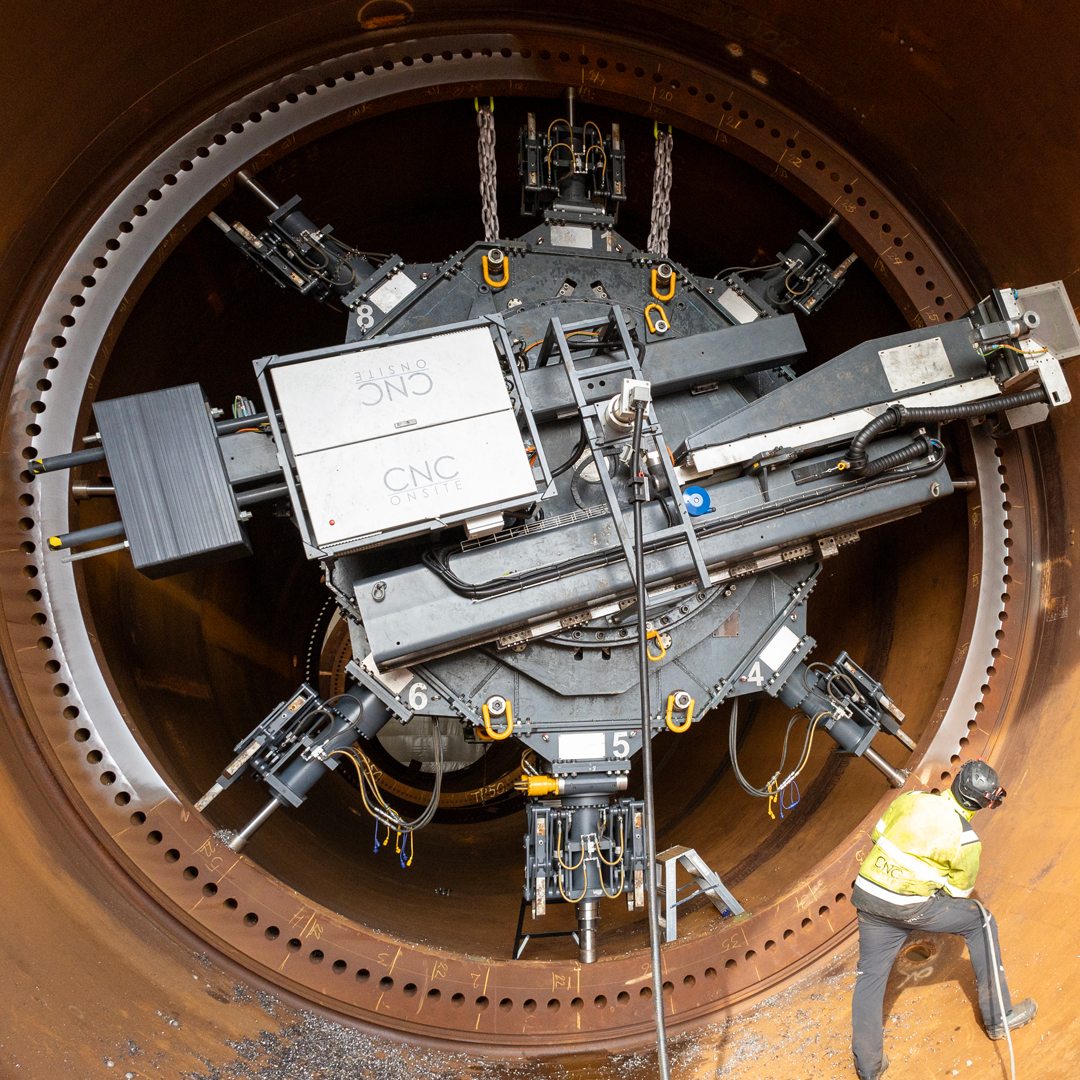
CS Wind Offshore commissioned a Goliath flange milling machine from CNC Onsite for the large-diameter transition piece flanges made at its facility in Aalborg, Denmark.
Goliath is designed for large offshore structures. It mounts directly on the flange and mills tower base, monopile and transition piece flanges up to 10 m in diameter after welding, under full CNC control. It handles flat, tilted and double-tilted flanges and features such as gasket grooves.
Machining the flange face after welding produces the flatness and surface geometry the bolted connection needs. It is a controlled, repeatable process, where heat straightening is a correction applied by hand afterwards.
The result
By integrating precision milling into production, CS Wind Offshore has a process that meets the tightening tolerance requirements of the offshore wind industry. The required global flatness of 1 mm is met consistently, and according to CS Wind Offshore the tolerances have been even better than specified.
- Improved flange flatness on large-diameter structures
- Less reliance on heat straightening and manual correction
- Consistency and quality control through production
- Better conditions for correct bolt preload and structural integrity
- Lower risk of bolt loosening and fatigue-related issues
- More freedom in future flange and foundation designs
Obtaining a global flatness of a couple of millimeters on a four to five meter diameter flange can be challenging enough, but obtaining the same result on today's eight-plus meter flanges is simply not possible with previous methods.
Søren Kellenberger, Sales Director, CNC Onsite
What it means going forward
Precision milling as a standard manufacturing step is a move from traditional correction methods to a controlled, repeatable production process. For CS Wind Offshore it reduces process variability and supports the long-term integrity of the bolted connections, as flange diameters keep increasing with the next generation of turbines.