Blade Root Contact Surface Repair
Restore worn, damaged or out-of-tolerance blade root contact surfaces with a controlled CNC milling process — onshore, offshore or with InnoMill.

 Yaw Ring Teeth Repair Patented in-nacelle machining. The ring is repaired where it stands - no removal, no crane.
  Rotor Lock Repair Full rotor lock seat restoration in-nacelle. No component removal required.
  Bolt Removal & Thread Repair Failed or seized bolts removed and threads recovered without replacing the host component.
  Yaw Sliding Surface Repair On-site repair of worn yaw sliding surfaces. No yaw ring exchange, no crane.
  Yaw Gear Mounting Flange Repair Worn yaw gear mounting flanges and damaged threads repaired uptower.
  Brake Disc Repair Damaged brake disc sections milled out and replaced uptower.
  Generator Shaft Repair Worn generator shafts machined back to tolerance in place. No generator replacement.
  Blade Root Contact Surface Repair CNC-controlled machining of worn or damaged blade root contact surfaces.
  Blade Root Bushing Repair Restore damaged blade root inserts onsite, reducing downtime from months to days.
  Blade Surface Milling Repair 3D milling of damaged blade areas to an exact surface - uptower or on ground.
  Monopiles & TPs Sub-millimetre flatness on monopiles and transition pieces. Precision machining performed before installation.
  Tower Flanges Tower section flange flatness restored on-site. No re-fabrication, no transport.
  Industrial Flange Machining Sub-millimetre flatness restored on site for industrial flanges on large production machinery.
  Sea Fastening Machining sea fastenings and towers stands to the required tolerances without transporting the structures to a workshop.
  Machine Plane Restoration On-site machining of machine plane. Flatness restored within specs without disassembling the press.
  Line Boring Portable line boring for large bores in-situ. Heavy industry, marine, energy.
  Axle & Shaft Repair Worn or damaged axle and shaft journals restored on-site. No removal, no replacement.
  3D Laser Tracker Measurement Portable laser tracker measurement of large components. Hole patterns, reference points, machine alignment and flange geometry - up to 0.05 mm.
  Easy-Laser Measurement Easy-Laser alignment and geometric measurement. Flange flatness, tilt, shaft and machine alignment - verified and documented on site.
  3D Scanning Handheld ZEISS 3D laser scanning on site. Reverse engineering, CAD comparison, wear and damage analysis - metrology-grade digital documentation.
Restore worn, damaged or out-of-tolerance blade root contact surfaces with a controlled CNC milling process — onshore, offshore or with InnoMill.
Trusted by wind operators and OEMs across Europe and North America
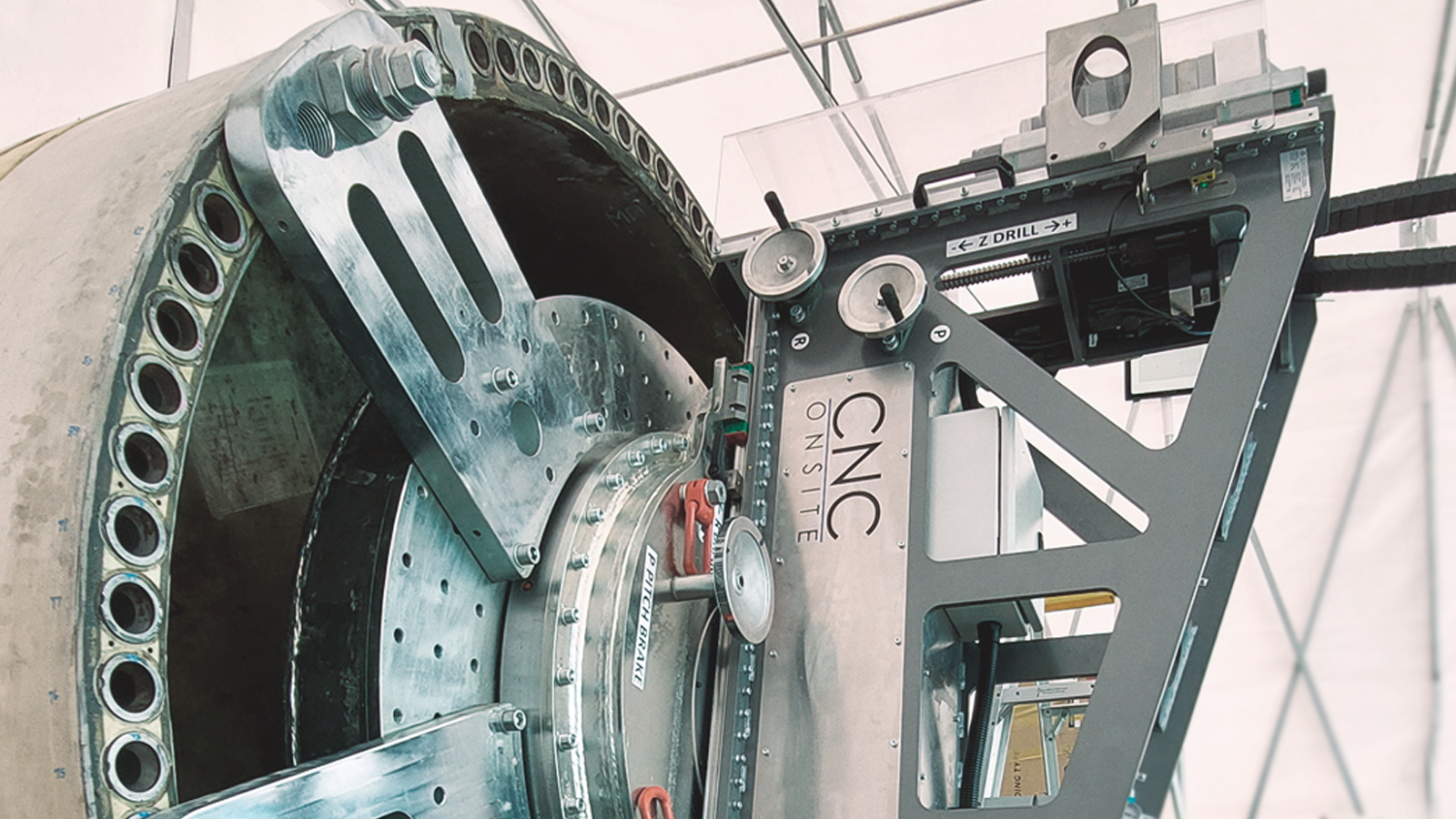
The blade root contact surface is a critical interface between the blade and the hub. Wear, damage or out-of-tolerance geometry can compromise the defined contact area and require controlled machining before the next repair or coating step.
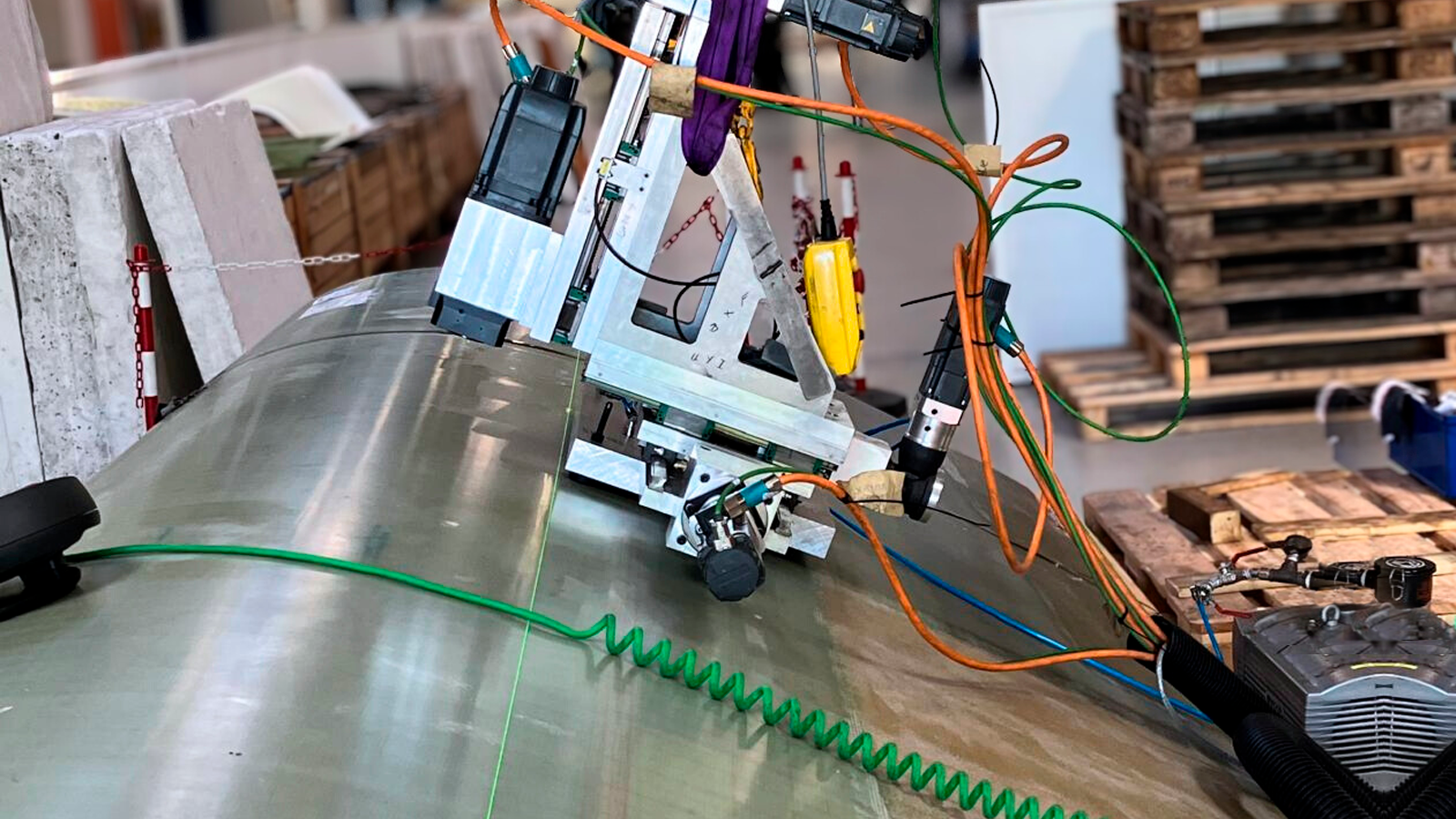
Our CNC-controlled process machines the defined blade root contact surface to an exact, fully definable geometry — instead of relying on manual surface preparation. The repair can be established onshore, offshore or with the dedicated InnoMill machine.
The blade root contact surface is assessed and the required machining geometry is defined. The CNC machine is then positioned, levelled and secured before machining the contact surface to the required geometry..
After machining, the surface is measured and verified to confirm the result and prepare it for the following repair, coating process or prefabricated repair segment.
Manual surface preparation can be time consuming and operator-dependent. CNC machining provides a controlled and repeatable process, allowing the defined contact surface to be restored according to the required geometry and tolerances.
Send us your damage report or turbine type and we'll respond within one working day with an assessment and indicative quote.

An engineer will get back to you within one working day.
Blade root contact surface repair is a CNC-controlled machining process used to restore a defined contact surface when it is worn, damaged or outside the required geometry.
Yes. The same controlled machining principle can be adapted for offshore vessel-deck execution, with the machine setup adjusted to available deck space, access and operating conditions.
CNC machining provides a controlled and repeatable process and reduces dependence on manual surface preparation. The defined area can be machined according to the required geometry and tolerances.
The blade type, contact surface geometry, surface condition, required tolerances, access and worksite determine the final machine configuration.